
Backyard wedding planning tips for a beautiful at-home celebration
Backyard weddings are my favorite kind of “beautiful and real.” You already have the setting, the memories, and the cozy vibe—your job is turning it into a venue that feels intentional (and comfortable) from the first arrival to the last song.
This guide covers the things couples usually underestimate: flow and layout, permits and neighbors, weather and lighting, and the few rentals that make the whole day feel effortless.
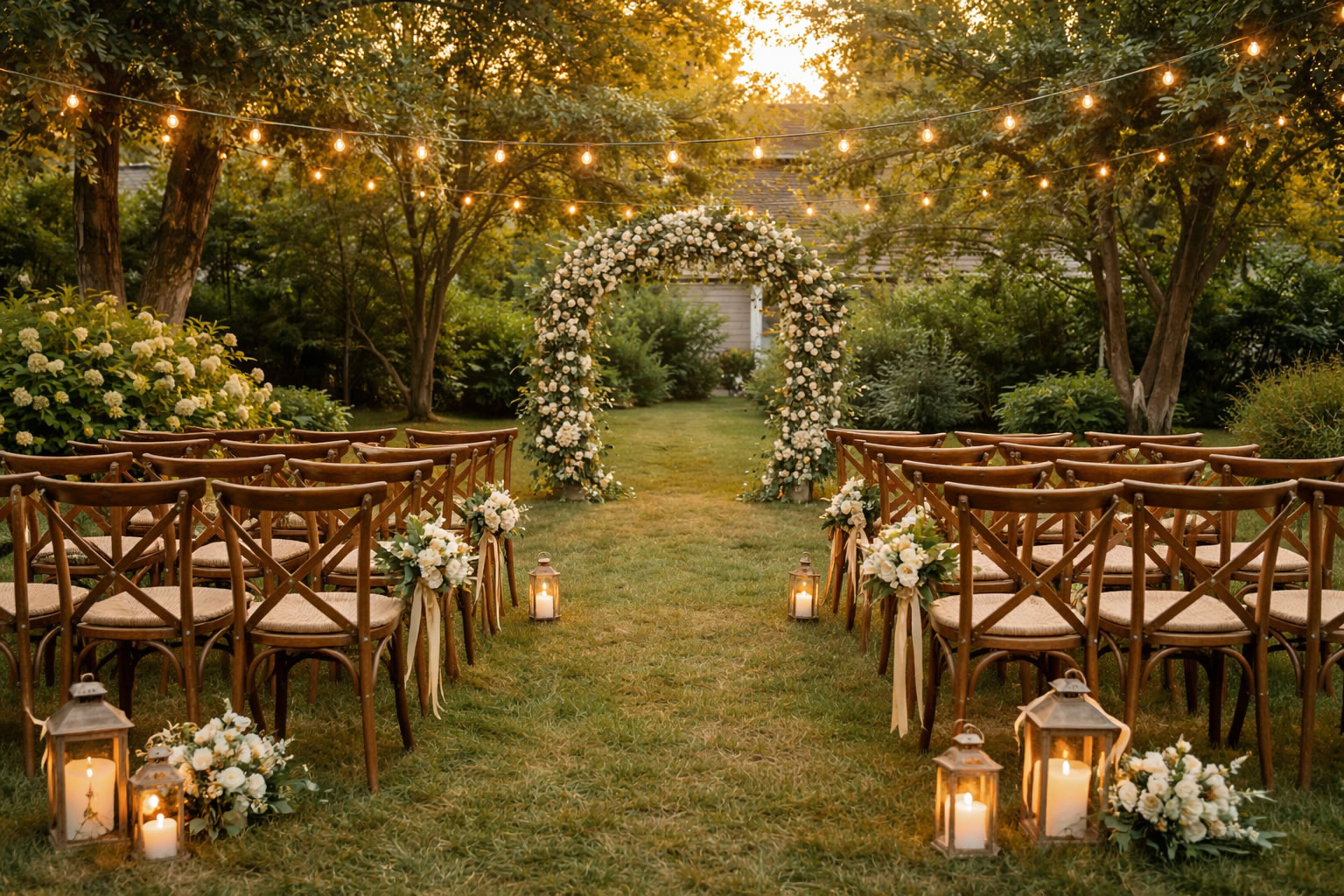
Five quick wins that make a backyard wedding feel “pro”
Design the flow first: guest arrival → ceremony → cocktail hour → dinner → dancing. If guests know where to go next, everything feels calm.
Pick your “focal point”: an arch, a tree, a pergola, or a simple rug + florals. You don’t need a stage—just a clear place to look.
Rent what you can’t fake: comfortable seating, proper lighting, and (often) restrooms if you’re hosting more than a small group.
Handle neighbors early: a friendly heads-up and a reasonable music cutoff prevent 90% of backyard wedding stress.
Plan shade and water: if the ceremony is warm, shade + cold drinks is the difference between “magical” and “melting.”
Start here: a simple backyard wedding plan that actually works
1) Guest count drives everything. Before décor, decide your realistic number. It affects parking, seating, restrooms, noise, and budget.
2) Sketch the space. Walk the yard with your phone and note sun/shade, slopes, sprinklers, and the easiest paths. Then draw a basic map.
3) Choose your ceremony spot and “golden hour” time. Stand where you’ll be, look at the background, and check the sun angle.
4) Confirm rules. Look up noise limits, parking rules, and permit requirements if you’re renting tents, using street parking heavily, or hosting a larger group.
5) Lock the essentials. Rentals (chairs/tables), lighting, and a weather plan. Everything else can be layered on later.
6) Build the day timeline. Give vendors and helpers a simple schedule (setup, ceremony, food, speeches, dancing, cleanup).
Why backyard weddings feel so special (and where to spend your budget)
More meaning, less “venue pressure”: your space already has a story, and guests feel it immediately.
You control the vibe: music, lighting, and décor can be exactly your style—simple, cozy, or elevated.
Budget flexibility: you can reduce venue fees, but plan for rentals like seating, lighting, restrooms, and weather coverage.
Comfort wins: shade, drinks, and flow matter more than fancy details. Guests remember how it felt.
Backyard wedding checklist (the “don’t forget this” version)
Confirm guest count and choose a layout (arrival, ceremony, cocktails, dinner, dancing).
Measure the space and note slopes, sprinklers, and shade zones.
Confirm local rules: noise, parking, permits, tent requirements.
Plan the weather backup: tent, covered patio, or indoor option.
Plan lighting: overhead string lights + pathway lighting + a few warm “anchor” lights.
Plan power: identify safe outlets/circuits for lighting and audio (avoid overloading one line).
Decide restrooms (especially for larger guest lists) and make them easy to find.
Create a parking plan and a clear entrance path with simple signage.
Confirm catering plan (kitchen access, serving area, trash, cleanup responsibilities).
Write a simple day-of timeline and share it with vendors and helpers.
Create a basic safety plan: first aid, emergency contacts, and a flashlight kit.
Assign setup/cleanup helpers and label bins for waste and recycling.
Frequently Asked Questions
Do I need a permit for a backyard wedding?
Many regions require a permit for events above a certain guest count, tents, street parking impact, or amplified sound. Check local regulations early so you can plan with confidence.
How can I keep guests comfortable if the weather turns hot?
Prioritize shade, water stations, and cold drinks. Portable fans help, and a later ceremony time can make a big difference.
What is the best way to handle sound if the venue is close to neighbors?
Keep speakers pointed inward, set a reasonable cutoff time, and test volume from the property line. Follow local noise ordinances and give neighbors a heads-up in advance.
Can I use my own backyard furniture for the event?
Yes for lounge corners and accents. For ceremony and dining, make sure seating is sturdy, clean, and consistent in height—renting chairs often looks cleaner and feels more comfortable.
Final Notes
If you do one thing this week, do the “yard walk”: stand where you’ll say your vows, look at the light, and map the paths guests will take. Once flow and comfort are handled, the pretty details become fun instead of stressful.
How Save This Date fits this plan: Once invitations go out, you need one place to track responses and communicate logistics. Save This Date helps you send a shareable invitation link and collect RSVPs in one organized guest list (attendance, plus-ones, dietary notes, accessibility needs). It also makes it easy to send reminders or last-minute updates by SMS or WhatsApp—ideal for backyard details like parking, entrance path, start time, and a weather backup plan. Learn more about Create your event for free!