
If you’re stuck on digital vs paper wedding invitations, you’re not alone. This choice affects your budget, your RSVP response rate, and how smooth (or chaotic) guest communication feels. Below is a practical, comparison-driven breakdown—written for real couples with real guest lists.
I’ll cover costs, response tracking, guest experience, and when a hybrid approach (paper + digital RSVP) is the best of both worlds.
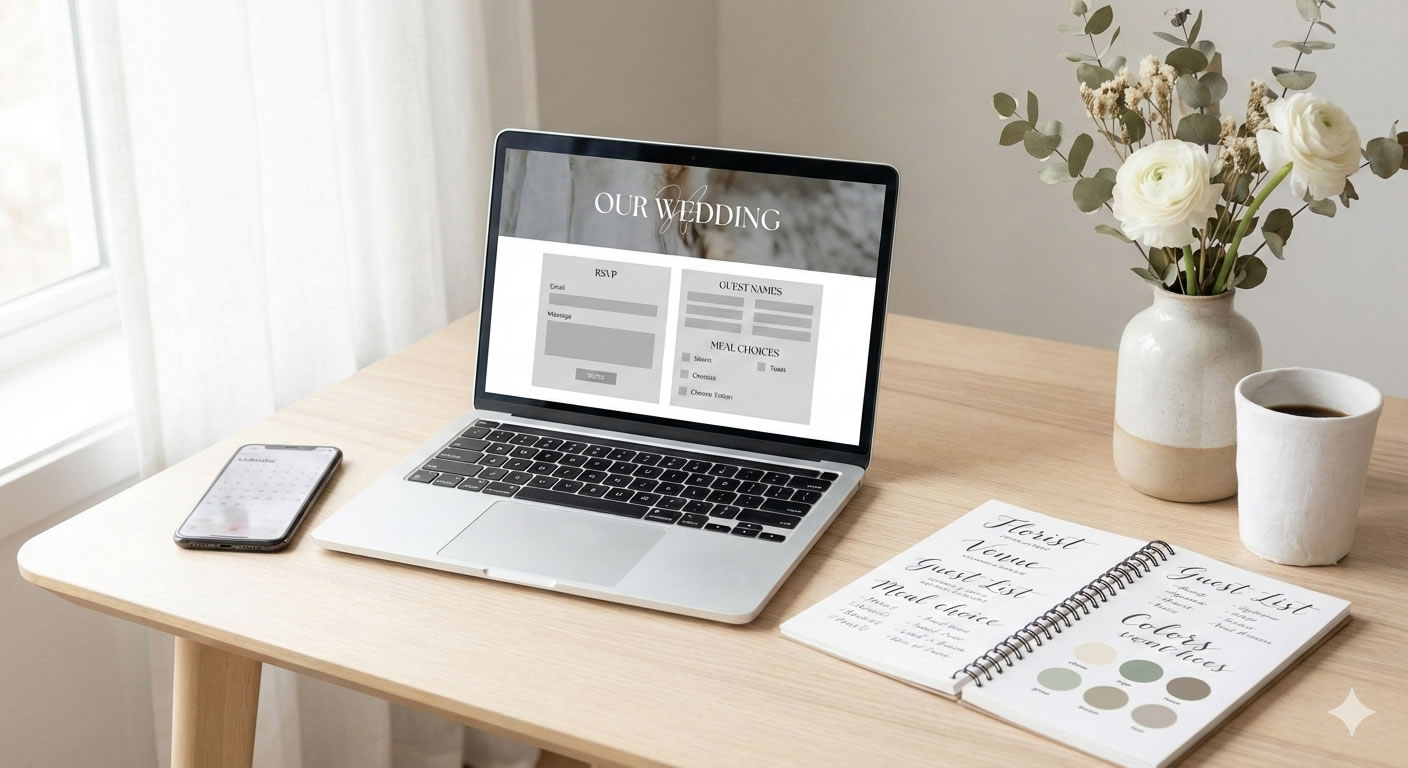
Quick answer: which one should you choose?
- Go mostly digital if you want fast RSVPs, easy reminders, and fewer moving parts.
- Go mostly paper if your crowd expects formal stationery and you value a keepsake experience.
- Go hybrid (paper invite + digital RSVP) if you want tradition without chasing replies.
Digital vs paper wedding invitations: side-by-side comparison
| What matters | Digital invitations | Paper invitations |
|---|---|---|
| Typical cost drivers | Platform or design cost (often low), optional paid messaging (WhatsApp/SMS), and your time. | Printing, envelopes, postage, inserts, and reprints for changes or late additions. |
| RSVP response rate | Often faster because guests can respond in seconds (especially on mobile). | Can be slower if replies require mailing back a card or calling/texting you. |
| Updates & corrections | Easy: update the event page and everyone sees the latest details. | Harder: changes can mean inserts, reprints, or follow-up messages. |
| Guest experience | Convenient, modern, and great for out-of-town guests. | Traditional, tactile, and often perceived as more formal. |
| Accessibility | Great for most guests; keep a plan for guests who aren’t tech-comfortable. | Works for everyone, but RSVP logistics still need a clean system. |
| Eco impact | No paper and no physical shipping. | Paper, ink, and shipping add footprint (you can reduce it with recycled stock and minimal inserts). |
Cost breakdown: what you actually pay for
Costs vary wildly by design choices, quantity, and how many updates you make. Here’s the most realistic way to think about it—by cost categories instead of “one number.”
Paper invitation costs usually include
- Printing: cardstock, ink, finishing (foil, embossing, letterpress add cost quickly).
- Envelopes + inserts: RSVP card, details card, accommodations card, etc.
- Postage: outgoing + (if you do it) return postage for RSVP cards.
- Reprints: date/time corrections, venue updates, extra guests, or last-minute additions.
Digital invitation costs usually include
- Design: template-based or custom.
- Delivery: email, link sharing, and (optionally) WhatsApp/SMS outreach.
- Time savings: fewer manual follow-ups—especially if reminders are automated.
Response rates and RSVP tracking: the real deciding factor
Couples rarely regret the “look” of the invitation. They regret chasing RSVPs. Digital tends to win here because the RSVP action is immediate—tap, choose, submit.
With paper, many couples end up doing digital follow-ups anyway: texting people, DM’ing them, or building a spreadsheet to track who replied.
If you love paper but want faster RSVPs
- Add a QR code that links directly to your RSVP page.
- Print a short, clear RSVP URL as a backup for guests who don’t use QR codes.
- Send one gentle reminder (digital) before your RSVP deadline.
Guest experience: who you’re inviting matters
A practical rule: the more mixed your guest list (ages, countries, tech comfort), the more a hybrid approach makes sense.
Digital works especially well when
- You have many out-of-town guests.
- You expect changes (weather plans, timing tweaks, transport updates).
- You want guests to access maps, schedules, and registry links in one place.
Paper shines when
- You’re hosting a very formal wedding and stationery is part of the experience.
- Many guests strongly prefer physical mail.
- You want a keepsake suite (and you’re comfortable managing the RSVP workflow).
My favorite compromise: paper invite + digital RSVP
If you want the tradition of paper without the RSVP chaos, this is the most balanced option: mail a beautiful invitation, then drive RSVPs to an online RSVP form. Guests get a formal invite, and you get clean attendance data.
Common pitfalls (and how to avoid them)
- “We’ll just track it manually” → You’ll end up chasing. Use a real RSVP system.
- Email deliverability issues → Use clear sender naming and resend to non-openers via WhatsApp/SMS when appropriate.
- Too many inserts → Whether paper or digital, keep details organized and easy to find.
- Not planning for non-digital guests → Offer a simple way to RSVP by phone/text or let you RSVP on their behalf.
Frequently asked questions
Are paperless wedding invitations “rude”?
Generally, no—especially for modern weddings. The key is clarity and making it easy for all guests to respond. For very formal events, many couples still choose paper or a hybrid approach.
How do I handle guests who don’t use smartphones?
Use a hybrid plan: mail a paper invite, include a phone number or simple RSVP option, and let a family member help collect responses if needed.
Can I do paper invitations and still get digital RSVP tracking?
Yes. Add a QR code and a short RSVP URL that goes to your RSVP page. This is one of the most effective ways to combine tradition with convenience.
What’s the easiest way to follow up with non-responders?
A short, friendly reminder works best. Digital tools make this easier because you can see who hasn’t responded and send reminders without manually checking spreadsheets.
How Save This Date fits this decision
If your goal is fewer follow-ups and cleaner RSVP tracking, Save This Date is built for the practical side of this debate. You can create an RSVP website, share it as a link, and collect responses in one place—so you always know who’s coming. If you choose a hybrid approach, you can mail paper invitations and use a QR code or link that sends guests to your RSVP page.
Save This Date also supports outreach by WhatsApp and SMS (depending on your setup), which is helpful when email isn’t enough or you want faster replies close to the RSVP deadline. The result is the same: less chasing, fewer mistakes, and a guest list you can trust.